CCU Full Form: Complete Career Guide to Critical Care Roles, Skills, Salary & Jobs

Anjali Rao
30 Sept 2026 · 8 min read
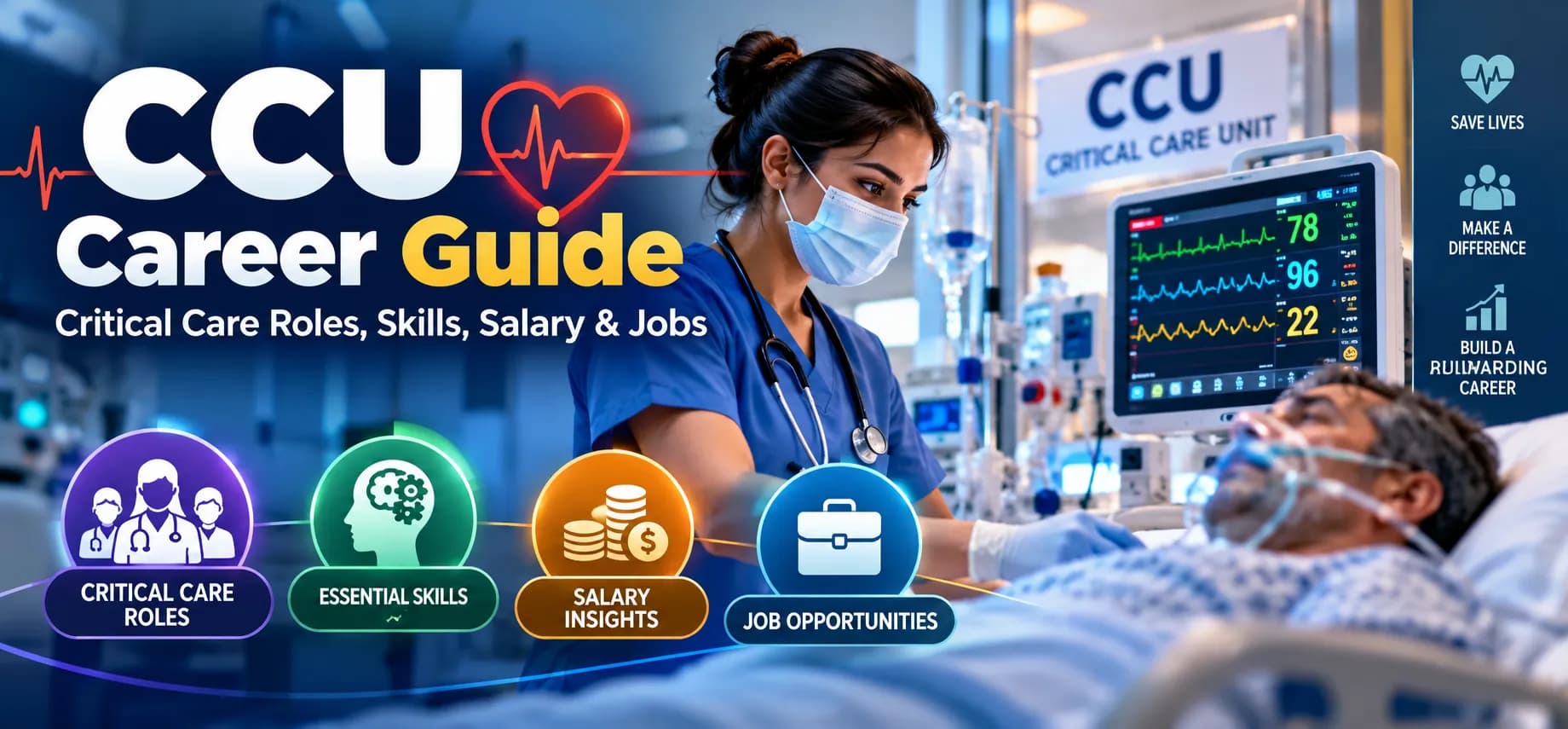
In a Critical Care Unit every second counts — skilled critical care nurses provide the continuous monitoring and life-saving care patients depend on.
Healthcare is one of the fastest-growing industries in India, and one specialty that plays a crucial role in saving lives is Critical Care. Every second counts when treating patients with life-threatening conditions, making professionals working in a CCU (Critical Care Unit) among the most respected healthcare workers.
If you're exploring a career in nursing or hospital-based patient care, understanding the CCU full form, job responsibilities, required skills, salary expectations, and career opportunities can help you make an informed decision.
In this comprehensive guide, you'll learn everything about CCU meaning, CCU vs ICU, critical care nurse role, CCU jobs, CCU nurse salary, and how to build a successful critical care career in India.
What is the Full Form of CCU?
The CCU full form is Critical Care Unit.
A Critical Care Unit is a specialized hospital department where patients suffering from severe illnesses or life-threatening conditions receive continuous monitoring and advanced medical treatment.
Patients admitted to a CCU usually require:
- Continuous heart monitoring
- Mechanical ventilation
- Advanced life support
- Emergency interventions
- Specialized nursing care
- 24/7 observation
CCUs are equipped with sophisticated medical equipment and staffed by specially trained doctors, nurses, respiratory therapists, and other healthcare professionals.
CCU Meaning
The CCU meaning refers to a hospital unit dedicated to treating critically ill patients who require intensive monitoring and specialized care.
Depending on the hospital, CCU may also refer to Coronary Care Unit, a department specifically designed for patients with serious heart conditions such as:
- Heart attacks
- Cardiac arrest
- Severe arrhythmias
- Heart failure
- Post-cardiac surgery recovery
However, in modern healthcare settings, the term Critical Care Unit is increasingly used to describe intensive care areas for patients with various critical conditions.
What is a Critical Care Unit?
A Critical Care Unit provides advanced treatment for patients experiencing:
- Organ failure
- Severe trauma
- Major surgeries
- Stroke
- Septic shock
- Respiratory failure
- Cardiac emergencies
- Poisoning
- Multi-organ dysfunction
The primary goal is to stabilize patients, monitor vital signs continuously, and prevent complications.
CCU vs ICU: What's the Difference?
One of the most common questions students ask is CCU vs ICU.
| Feature | CCU | ICU |
|---|---|---|
| Full Form | Critical Care Unit (or Coronary Care Unit) | Intensive Care Unit |
| Focus | Critically ill patients; sometimes cardiac-specific | All critically ill patients |
| Main Cases | Heart diseases, cardiac surgery, critical illnesses | Trauma, neurological disorders, respiratory failure, infections |
| Staff | Cardiologists, intensivists, critical care nurses | Intensivists, specialists, ICU nurses |
| Equipment | Cardiac monitors, ventilators, infusion pumps | Advanced life support systems, ventilators, dialysis machines |
| Monitoring | Continuous | Continuous |
Which is Better?
Neither is "better." The choice depends on the patient's condition.
- Cardiac emergencies often require a CCU.
- Multiple organ failure, severe trauma, or critical infections generally require an ICU.
Many hospitals today use the terms interchangeably depending on their infrastructure.
Who is a Critical Care Nurse?
A critical care nurse is a registered nurse specially trained to care for critically ill patients admitted to CCUs, ICUs, emergency departments, trauma centers, and post-operative recovery units.
These nurses work alongside intensivists, surgeons, physicians, respiratory therapists, and emergency teams to provide life-saving care.
Critical Care Nurse Role
The critical care nurse role extends far beyond routine nursing care.
Their responsibilities include:
Patient Assessment
- Monitoring blood pressure
- Pulse rate
- Oxygen saturation
- ECG monitoring
- Neurological assessments
Medication Administration
- IV medications
- Vasopressors
- Sedatives
- Emergency drugs
- Blood transfusions
Equipment Management
Operating:
- Ventilators
- Cardiac monitors
- Infusion pumps
- Defibrillators
- Dialysis machines
Emergency Response
Critical care nurses participate in:
- CPR
- Cardiac arrest management
- Rapid response teams
- Code Blue emergencies
Family Support
They educate and support patients' families during critical illnesses.
Skills Required for a CCU Career
A successful critical care career requires technical expertise and emotional resilience.
Clinical Skills
- ECG interpretation
- Ventilator management
- IV therapy
- Emergency response
- Infection control
- Critical patient assessment
- Medication administration
Soft Skills
- Communication
- Decision-making
- Teamwork
- Time management
- Emotional intelligence
- Stress management
- Compassion
- Leadership
Educational Qualification
To become a critical care nurse, candidates generally need:
- Option 1: GNM (General Nursing and Midwifery)
- Option 2: B.Sc Nursing
- Option 3: Post Basic B.Sc Nursing
- Option 4: M.Sc Nursing (Critical Care)
Continue Your Journey
Not sure where to go next?
Whether you're searching for your next healthcare opportunity or hiring qualified professionals, Nextenti helps you connect with the right people through AI-powered matching.
👩⚕️ Looking for Jobs?
Browse verified healthcare opportunities across hospitals, clinics and healthcare organizations.
Browse Jobs →🏥 Hiring Talent?
Post jobs and receive AI-matched healthcare professionals faster.
Many hospitals also prefer candidates with specialized certifications in Critical Care Nursing.
Certifications That Add Value
Professionals can strengthen their profiles with certifications such as:
- Basic Life Support (BLS)
- Advanced Cardiac Life Support (ACLS)
- Critical Care Nursing Certification
- Pediatric Advanced Life Support (PALS)
- Trauma Nursing Courses
- Infection Control Programs
These certifications improve employability and career growth.
Career Scope in Critical Care
The demand for critical care professionals continues to rise because of:
- Expansion of multispecialty hospitals
- Increasing ICU beds
- Aging population
- Rising cardiac diseases
- Growth in emergency medicine
- Medical tourism
- Post-pandemic healthcare expansion
India requires more trained critical care professionals than ever before.
Critical Care Nursing Jobs
Some of the most common critical care nursing jobs include:
- CCU Nurse
- ICU Nurse
- Cardiac Care Nurse
- Trauma Nurse
- Emergency Nurse
- Ventilator Nurse
- Post-operative Care Nurse
- Dialysis Critical Care Nurse
- Flight Nurse
- Critical Care Educator
- Nurse Supervisor
- Clinical Instructor
Where Can Critical Care Nurses Work?
Career opportunities exist in:
- Multispecialty hospitals
- Government hospitals
- Private hospitals
- Cardiac specialty hospitals
- Trauma centers
- Emergency departments
- Organ transplant centers
- Military hospitals
- Air ambulance services
- Home ICU services
- Medical colleges
CCU Nurse Salary in India
The CCU nurse salary depends on education, hospital type, experience, and city.
| Experience | Average Annual Salary |
|---|---|
| Fresher | ₹2.8 – ₹4.5 LPA |
| 2–5 Years | ₹4.5 – ₹7 LPA |
| 5–10 Years | ₹7 – ₹10 LPA |
| Senior Critical Care Nurse | ₹10 – ₹15+ LPA |
Metro cities like Bengaluru, Hyderabad, Chennai, Mumbai, Delhi NCR, and Pune generally offer higher salaries.
Professionals working in NABH-accredited hospitals, corporate hospital chains, or international healthcare organizations may earn significantly more through incentives, overtime, and shift allowances.
Future Scope of Critical Care Careers
Critical care remains one of the most stable and rewarding healthcare careers.
Emerging opportunities include:
- Tele-ICU services
- AI-assisted patient monitoring
- Remote critical care
- ECMO units
- Cardiac specialty hospitals
- Organ transplant ICUs
- Robotic critical care support
- International nursing opportunities
With healthcare infrastructure expanding rapidly, demand for trained critical care professionals is expected to remain strong.
Why Choose a Career in Critical Care?
A career in critical care offers:
- High job security
- Competitive salaries
- Strong career growth
- Advanced specialization opportunities
- International career prospects
- Continuous learning
- Opportunity to save lives every day
For individuals who enjoy working in fast-paced environments and making a meaningful impact on patient outcomes, critical care nursing can be highly fulfilling.
Find Critical Care Nursing Jobs with Nextenti
Whether you're a fresher or an experienced nurse, finding the right opportunity is easier with Nextenti, an AI-powered healthcare hiring platform.
Through Nextenti, healthcare professionals can:
- Discover verified critical care nursing jobs
- Apply to leading hospitals across India
- Receive AI-powered job recommendations
- Build a professional healthcare profile
- Connect with trusted healthcare employers
If you're planning a critical care career, Nextenti helps you take the next step toward your ideal role.
Conclusion
Understanding the CCU full form is only the beginning of exploring a rewarding healthcare career. Critical Care Units are among the most important departments in modern hospitals, where skilled healthcare professionals work together to provide life-saving treatment.
Whether you're interested in becoming a CCU nurse, ICU nurse, or another critical care specialist, this field offers excellent career stability, continuous learning, and opportunities to make a real difference in patients' lives. By developing strong clinical expertise, obtaining relevant certifications, and staying updated with advances in critical care, you can build a successful and impactful career in this high-demand specialty.
Platforms like Nextenti can help you discover verified healthcare opportunities, connect with leading employers, and take the next step toward a fulfilling career in critical care.
References
- World Health Organization (WHO). Health Workforce and Nursing Resources.
- Indian Nursing Council (INC). Nursing Education Regulations and Standards.
- National Medical Commission (NMC). Medical Education and Hospital Standards.
- Ministry of Health & Family Welfare (MoHFW), Government of India. National Health Policies and Critical Care Guidelines.
- Society of Critical Care Medicine (SCCM). Critical Care Education and Best Practices.
- American Association of Critical-Care Nurses (AACN). Standards for Critical Care Nursing Practice.
- National Accreditation Board for Hospitals & Healthcare Providers (NABH). Hospital Accreditation Standards.
- International Council of Nurses (ICN). Global Nursing Workforce Reports.
- National Health Systems Resource Centre (NHSRC). Healthcare Infrastructure and Human Resources Reports.
- Salary insights synthesized from leading employment and salary platforms, including AmbitionBox, Glassdoor, and Indeed (indicative ranges that vary by employer, city, and experience).
Frequently Asked Questions
1. What is the full form of CCU?
The CCU full form is Critical Care Unit. In some hospitals, it may also refer to Coronary Care Unit, which specializes in treating patients with severe heart conditions.
2. What is the difference between CCU and ICU?
A CCU (Critical/Coronary Care Unit) mainly treats patients with severe heart conditions, while an ICU (Intensive Care Unit) treats patients with various life-threatening illnesses, injuries, or organ failures.
3. What does a CCU nurse do?
A CCU nurse monitors critically ill patients, administers medications, operates life-support equipment, and provides emergency care and continuous patient monitoring.
4. What is the salary of a critical care nurse?
A critical care nurse in India typically earns ₹2.8–₹4.5 LPA as a fresher and ₹7–₹15+ LPA with experience and specialized skills.
5. How do I become a critical care nurse?
Complete GNM or B.Sc Nursing, register with the nursing council, gain ICU/CCU experience, and obtain certifications like BLS and ACLS.

About the Author
Anjali Rao
Critical Care Nursing Educator
Anjali Rao trains and mentors nurses for ICU and CCU roles, covering critical care skills, certifications and career progression in Indian hospitals.
Featured Jobs
Explore latest openings by profession or location
Jobs by Profession
Browse roles by specialty
Jobs by Location
Explore openings by city
Featured Jobs
Explore latest openings by profession or location
Jobs by Profession
Browse roles by specialty
Jobs by Location
Explore openings by city
Keep Reading
You Might Also Like
 Career Guides
MLT Career Guide: Medical Lab Technician Salary, Scope & Jobs
Know the MLT full form, salary, eligibility, career scope, and lab technician jobs. Explore opportunities in Medical Laboratory Technology.

Priyanka Das
30 Sept 2026
 Career Guides
BUMS Full Form: Course Details, Salary, Scope & Unani Doctor Career Guide
Learn about the BUMS course, NEET eligibility, salary, career scope and explore verified Unani doctor jobs across India with Nextenti.
Dr. Imran Siddiqui
30 Sept 2026
 Career Guides
DMLT Full Form: Career Guide, Salary Growth, Scope & Lab Technician Jobs in India
Learn about the complete DMLT career guide with salary, scope and the latest lab technician jobs in India. Find verified healthcare jobs on Nextenti.
Arvind Shetty
30 Sept 2026