Paramedical Courses in India: Complete Career Guide – List, Salary, Scope & Jobs

Karthik Subramanian
30 Sept 2026 · 8 min read
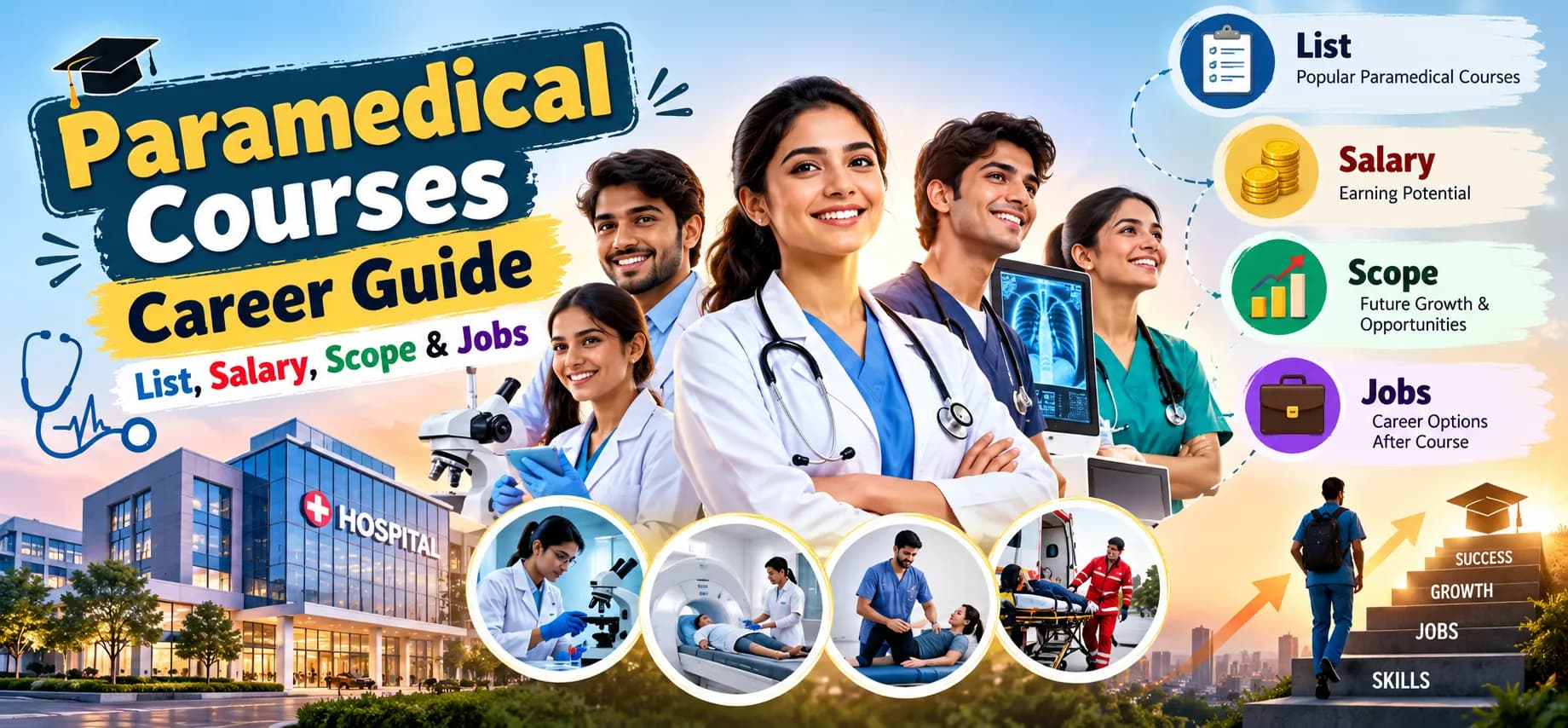
Paramedical professionals form the backbone of modern healthcare, diagnosing, assisting and supporting patients behind the scenes.
Paramedical Courses: Complete Career Guide for Students After 12th
The healthcare industry is one of the fastest-growing employment sectors in India. While doctors and nurses are often the face of healthcare, thousands of skilled professionals work behind the scenes to diagnose diseases, assist surgeries, operate medical equipment, manage emergency care, and support patient recovery. These professionals are known as paramedical professionals, and they form the backbone of modern healthcare.
As India expands its hospital infrastructure, diagnostic centers, emergency services, and digital healthcare ecosystem, the demand for trained paramedical professionals continues to rise. This has created a wide range of paramedical jobs across hospitals, laboratories, imaging centers, rehabilitation facilities, and emergency medical services, making the field one of the most promising career choices for students after Class 12.
Whether you want to work in hospitals, laboratories, imaging centers, rehabilitation clinics, or emergency medical services, paramedical education offers diverse career opportunities with relatively shorter course durations than many traditional medical degrees.
In this comprehensive guide, you'll learn about the paramedical courses list, eligibility, paramedical courses after 12th, fees, salary, career scope, jobs, and whether you can pursue paramedical without NEET.
What are Paramedical Courses?
Paramedical courses are professional healthcare programs that train students to assist doctors and other medical professionals in diagnosing, treating, and caring for patients.
These programs focus on practical clinical skills, diagnostic technologies, rehabilitation, emergency care, laboratory sciences, medical imaging, and patient support services.
Unlike MBBS or BDS, most paramedical programs emphasize specialized technical and clinical roles that are essential for the smooth functioning of healthcare facilities.
Paramedical professionals work in:
- Hospitals
- Diagnostic laboratories
- Imaging centers
- Blood banks
- Intensive Care Units (ICUs)
- Emergency departments
- Rehabilitation centers
- Community healthcare organizations
- Research laboratories
Paramedical Courses List
Students can choose from certificate, diploma, undergraduate, and postgraduate programs depending on their career goals.
| Course | Duration |
|---|---|
| B.Sc Medical Laboratory Technology (MLT) | 3–4 Years |
| Bachelor of Physiotherapy (BPT) | 4.5 Years |
| B.Sc Radiology & Imaging Technology | 3–4 Years |
| B.Sc Operation Theatre Technology | 3–4 Years |
| B.Sc Dialysis Technology | 3–4 Years |
| B.Sc Optometry | 4 Years |
| B.Sc Emergency & Trauma Care Technology | 3–4 Years |
| B.Sc Cardiac Care Technology | 4 Years |
| B.Sc Respiratory Therapy | 4 Years |
| B.Sc Anaesthesia Technology | 3–4 Years |
| Diploma in Medical Laboratory Technology (DMLT) | 2 Years |
| Diploma in Radiology Technology | 2 Years |
| Diploma in Operation Theatre Technology | 2 Years |
| Diploma in X-Ray Technology | 2 Years |
| Certificate in ECG Technology | 6–12 Months |
Paramedical Courses After 12th
One of the biggest advantages of paramedical education is that students can begin immediately after completing Class 12.
For PCB Students
Students with Physics, Chemistry, and Biology can apply for:
- B.Sc Medical Laboratory Technology
- Bachelor of Physiotherapy
- B.Sc Radiology
- B.Sc Operation Theatre Technology
- B.Sc Cardiac Care Technology
- B.Sc Dialysis Technology
- B.Sc Respiratory Therapy
- B.Sc Optometry
For PCM Students
Certain institutions also offer selected technology-based paramedical programs to students with Mathematics instead of Biology.
Diploma Courses
Students seeking quicker entry into the workforce can opt for diploma programs such as:
- Diploma in Medical Laboratory Technology
- Diploma in Radiology
- Diploma in Operation Theatre Technology
- Diploma in X-Ray Technology
Eligibility Criteria
Most institutions require candidates to:
- Pass Class 12 from a recognized board
- Have Physics and Chemistry as compulsory subjects
- Biology for most clinical programs
- Score at least 45–50% aggregate marks (may vary by institution)
Some colleges admit students based on merit, while others conduct entrance examinations.
Best Paramedical Courses in India
1. Bachelor of Physiotherapy (BPT)
One of the most respected allied healthcare professions, physiotherapists help patients recover from injuries, surgeries, neurological disorders, and musculoskeletal conditions.
Career Opportunities
- Physiotherapist
- Sports Therapist
- Rehabilitation Specialist
- Clinical Physiotherapist
2. Medical Laboratory Technology (MLT)
Laboratory professionals perform blood tests, pathology investigations, microbiology testing, and diagnostic procedures that assist doctors in accurate diagnosis.
Career Opportunities
- Medical Laboratory Technologist
- Pathology Lab Executive
- Laboratory Supervisor
- Research Technician
3. Radiology & Imaging Technology
Radiographers operate advanced imaging systems including X-ray, CT, MRI, mammography, and ultrasound equipment.
Demand continues to rise as diagnostic imaging becomes central to modern healthcare.
4. Operation Theatre Technology
OT Technologists assist surgeons before, during, and after surgical procedures by preparing operation theatres, sterilizing equipment, and maintaining surgical safety.
5. Cardiac Care Technology
Cardiac technologists assist cardiologists with ECGs, stress tests, echocardiography support, and cardiac monitoring.
6. Dialysis Technology
Continue Your Journey
Not sure where to go next?
Whether you're searching for your next healthcare opportunity or hiring qualified professionals, Nextenti helps you connect with the right people through AI-powered matching.
👩⚕️ Looking for Jobs?
Browse verified healthcare opportunities across hospitals, clinics and healthcare organizations.
Browse Jobs →🏥 Hiring Talent?
Post jobs and receive AI-matched healthcare professionals faster.
Dialysis technologists operate dialysis machines and provide care for patients with kidney disorders under nephrologists' supervision.
Can You Pursue Paramedical Courses Without NEET?
Yes. One of the most common questions students ask is whether they can pursue paramedical without NEET.
The answer is yes. Many diploma and undergraduate paramedical courses offered by universities, private colleges, and state institutions do not require NEET. Admissions are often based on Class 12 marks or institution-specific entrance exams.
However, admission requirements vary by college and state, so candidates should always verify the latest eligibility criteria before applying.
Paramedical Courses Fees
The cost of education depends on the institution, course type, and location.
| Course Type | Approximate Annual Fee |
|---|---|
| Certificate | ₹10,000–₹50,000 |
| Diploma | ₹20,000–₹1,00,000 |
| Government B.Sc Programs | ₹20,000–₹80,000 |
| Private B.Sc Programs | ₹75,000–₹3,00,000 |
Additional expenses such as hostel accommodation, books, uniforms, and laboratory charges may apply.
Paramedical Salary in India
The paramedical salary varies based on specialization, employer, city, qualifications, and experience.
| Job Role | Estimated Monthly Salary |
|---|---|
| Medical Laboratory Technologist | ₹20,000–₹45,000 |
| Radiology Technologist | ₹25,000–₹60,000 |
| Physiotherapist | ₹25,000–₹70,000 |
| Dialysis Technician | ₹22,000–₹45,000 |
| Operation Theatre Technologist | ₹20,000–₹50,000 |
| Cardiac Care Technologist | ₹30,000–₹65,000 |
| Emergency Medical Technician | ₹20,000–₹40,000 |
With experience, advanced certifications, or employment in specialty hospitals, salaries can increase significantly.
Paramedical Jobs
Graduates have opportunities in both the government and private sectors.
Popular paramedical jobs include:
- Medical Laboratory Technologist
- Radiology Technician
- MRI Technician
- CT Scan Technologist
- Physiotherapist
- Dialysis Technician
- Operation Theatre Technologist
- Emergency Medical Technician
- Cardiac Care Technologist
- Respiratory Therapist
- Blood Bank Technician
- Clinical Research Assistant
Top Recruiters
Paramedical professionals are recruited by:
- Multi-specialty hospitals
- Government hospitals
- Diagnostic laboratories
- Medical colleges
- Rehabilitation centers
- Blood banks
- Emergency ambulance services
- Research institutions
- Public health organizations
- Corporate healthcare chains
Career Scope
The future of paramedical careers is promising due to:
- Expansion of healthcare infrastructure
- Rising demand for diagnostics
- Growth in medical tourism
- Increasing chronic diseases
- Adoption of advanced medical technologies
- Higher demand for allied healthcare professionals
Professionals can also pursue postgraduate education, specialized certifications, teaching roles, healthcare administration, or research careers.
How Nextenti Helps Paramedical Professionals
Finding the right healthcare opportunity can be challenging, especially for fresh graduates and early-career professionals.
Nextenti – Healthcare Hiring Simplified connects healthcare professionals with hospitals, diagnostic centers, clinics, and healthcare organizations through an AI-powered hiring platform.
With Nextenti, paramedical professionals can:
- Discover verified healthcare job opportunities
- Apply for full-time, part-time, freelance, and locum roles
- Create a professional healthcare profile
- Receive personalized job recommendations
- Connect with leading healthcare employers across India
Whether you're a laboratory technologist, radiographer, physiotherapist, dialysis technician, or emergency medical professional, Nextenti helps you explore career opportunities that match your skills and experience.
Conclusion
Paramedical courses offer an excellent career pathway for students who want to build a rewarding future in healthcare without pursuing traditional medical degrees. With diverse specializations, shorter course durations, growing industry demand, and strong employment prospects, these programs provide opportunities to make a meaningful impact on patient care.
Whether you're interested in medical laboratory technology, physiotherapy, radiology, operation theatre technology, or emergency medical services, choosing the right course based on your interests and career goals is essential. Before applying, compare institutions, review eligibility criteria, understand fee structures, and evaluate placement opportunities.
As India's healthcare ecosystem continues to expand, skilled paramedical professionals will remain in high demand across hospitals, diagnostic centers, rehabilitation facilities, and public health organizations. With the right education, practical training, and continuous skill development, a career in paramedical sciences can offer long-term stability, professional growth, and the opportunity to improve lives every day.
Frequently Asked Questions
1. What are the best paramedical courses after 12th?
The best paramedical courses after 12th include BPT, B.Sc MLT, B.Sc Radiology, B.Sc Operation Theatre Technology, B.Sc Cardiac Care Technology, and B.Sc Dialysis Technology.
2. Can I do paramedical courses without NEET?
Yes. Many paramedical courses offer admission without NEET based on Class 12 marks or college-specific entrance exams.
3. Which paramedical course has the highest salary?
Radiology & Imaging Technology, Cardiac Care Technology, Physiotherapy, and Medical Laboratory Technology are among the highest-paying paramedical specializations.
4. What jobs can I get after a paramedical course?
You can work as a Lab Technologist, Radiology Technician, Physiotherapist, OT Technologist, Dialysis Technician, Emergency Medical Technician, or Cardiac Care Technologist.
5. What are the fees for paramedical courses?
Paramedical course fees generally range from ₹10,000 to ₹3,00,000 per year, depending on the course type and institution.

About the Author
Karthik Subramanian
Allied Health Education Advisor
Karthik Subramanian helps students choose paramedical and allied health courses, with a focus on employability in hospitals, diagnostics and emergency care.
Featured Jobs
Explore latest openings by profession or location
Jobs by Profession
Browse roles by specialty
Jobs by Location
Explore openings by city
Featured Jobs
Explore latest openings by profession or location
Jobs by Profession
Browse roles by specialty
Jobs by Location
Explore openings by city
Keep Reading
You Might Also Like
 Healthcare Hiring
Nursing Recruitment in India: How Hospitals Can Find and Hire Qualified Nurses
Explore nurse recruitment in India, including nursing qualifications, hospital staffing requirements, hiring channels, recruitment costs and AI hiring solutions.

Srikanth
12 Nov 2026
 Healthcare Jobs
Nursing Jobs in India: Roles, Eligibility, and Opportunities for Nurses
Explore nursing careers in India, including job opportunities, qualifications, eligibility, salaries, specialisations and overseas nursing jobs.
Meghana Ballekari
12 Nov 2026
 Career Guides
Doctor Jobs in India: How to Find the Right Opportunity
Find doctor jobs in India across hospitals and government institutions. Explore roles, salary ranges, medical specialities and application tips.
Sanjay Kagitha
10 Nov 2026