How Workforce Analytics Helps Hospitals Hire Better

Nagaraju Bathini
29 Oct 2026 · 8 min read
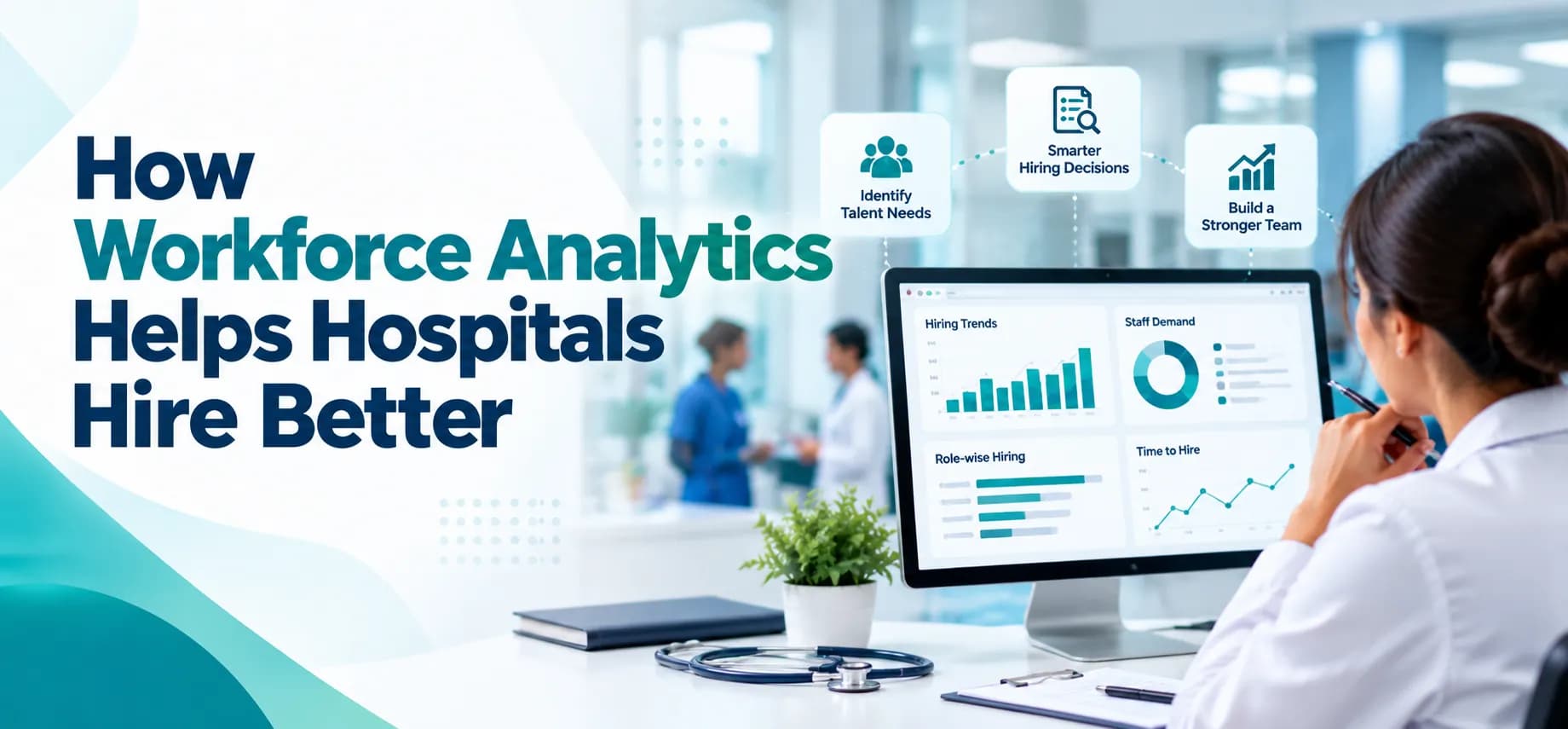
Workforce analytics helps hospitals connect staffing data, patient demand, and recruitment metrics to plan ahead and hire the right healthcare professionals.
For decades, across hospitals, diagnostic chains, and health-tech enterprises, talent acquisition often relied on intuition, recommendations, and reactive vacancy filling. In 2026, this type of approach is harder to sustain amid increasing workforce complexity.
Rising patient volume, healthcare quality requirements, and persistent skill shortages have made workforce planning an important operational concern. NABH standards for hospitals include human resource management and information management, while NABL provides accreditation for testing and medical laboratories under relevant quality standards.
Deploying workforce analytics in healthcare allows HR to move from reactive hiring to a more data-backed approach. By connecting staffing requirements, skill availability, and operational needs with recruitment metrics, hospitals can make informed decisions.
Leveraging Hospital Staffing Data to Fix Recruitment Bottlenecks
Recruitment generates data at almost every stage, from applications to offer acceptance, onboarding, and early attrition. By analysing hospital staffing data, HRs can see where this pipeline slows down, which roles are difficult to fill, and why and where candidates are most likely to drop out.
Key metrics can include:
- Time-to-Fill vs. Time-to-Productivity: Tracking how long a clinical or administrative role remains vacant alongside how quickly a new hire becomes fully productive can help hospitals evaluate both recruitment speed and onboarding effectiveness.
- Offer Acceptance Rate: Analysing why candidates reject offers can reveal potential issues involving compensation, shift structures, location, or the candidate experience.
- 90-Day Attrition: Tracking how many new hires leave within their first three months can highlight potential issues with onboarding, job expectations, scheduling, or role fit that warrant further investigation.
When hospitals compare these metrics across departments, roles, locations, and hiring periods, it is more useful. This is where healthcare workforce analytics can help turn routine data into actionable recruitment workforce insights.
Predictive Staffing and Strategic Workforce Planning
Hospital administrators and nursing leaders have traditionally relied on their experience and operational knowledge to manage staffing and respond to changing patient demand. These approaches remain important, particularly when unexpected absences or changes in patient volume require immediate decisions. However, as hospitals and healthcare networks become more complex, combining this expertise with workforce data can provide an additional layer of support for staffing decisions.
By analysing historical patient volumes, admissions, occupancy patterns, and workforce data, hospitals can move beyond addressing immediate staffing gaps and begin anticipating future workforce requirements. Research has demonstrated that forecasting patient demand can support more proactive staffing and scheduling decisions across areas such as emergency departments, operating rooms, and nursing units.
Anticipating Seasonal Demand
Patient demand can vary with seasons, holidays, local health trends, and changes in service utilisation. For example, some hospitals may experience higher volumes of infectious illnesses during monsoon periods or increased outpatient activity around particular holidays. Experienced administrators may recognise these patterns from years of operational experience, while predictive staffing healthcare models can use historical data to quantify recurring trends and estimate periods when demand is likely to increase.
These forecasts can help HR teams and unit managers review staffing requirements earlier, adjust rosters, and assess whether additional clinical or support staff may be needed. The goal is not to replace operational judgement, but to give decision-makers more information when preparing for expected changes in demand.
Balancing the Workforce Mix
Hospitals often rely on a combination of permanent employees, contract professionals, and locum staff to maintain operational flexibility. While overtime and shift swaps can help teams respond to unexpected gaps, repeated reliance on these measures may indicate a need to reassess staffing capacity.
Workforce planning analytics can help hospitals identify recurring shortages by analysing vacancy patterns, shift coverage, staff availability, patient volumes, and historical demand. These insights can support decisions about when additional permanent recruitment may be appropriate and when temporary or locum coverage could provide short-term capacity. This makes workforce planning more responsive to actual operational requirements rather than treating every staffing gap as an isolated event.
Supporting Workforce Well-being and Retention
Workforce analytics can also provide visibility into workload patterns that may otherwise be difficult to identify across large teams. By analysing shift distribution, overtime, absences, scheduling patterns, and staffing levels, healthcare workforce analytics can help managers identify units or roles where workload pressure may be increasing.
These insights do not replace conversations with employees or managerial judgement, but they can highlight areas that may require closer attention. Hospitals can then review staffing levels, scheduling practices, or additional workforce requirements to support more sustainable workloads and reduce the risk of persistent staffing pressure.
Implementing Data-Driven Recruitment & Nextenti Integration
Moving toward a data driven recruitment healthcare model does not mean replacing interviews, recruiter expertise, or professional judgement with algorithms. Instead, it gives hospital talent acquisition teams additional information to evaluate candidates, identify staffing requirements, and improve the efficiency of the hiring process. When recruitment data is connected with workforce requirements, hospitals can make more informed decisions about which roles to prioritise and which candidates are best aligned with them.
Enhancing Candidate Alignment and Retention
Data can complement traditional selection methods by helping recruiters organise and evaluate candidate information consistently throughout the hiring process. Applying healthcare workforce analytics to recruitment can help hospitals examine factors such as qualifications, experience, role requirements, location, availability, and previous hiring outcomes.
Continue Your Journey
Not sure where to go next?
Whether you're searching for your next healthcare opportunity or hiring qualified professionals, Nextenti helps you connect with the right people through AI-powered matching.
👩⚕️ Looking for Jobs?
Browse verified healthcare opportunities across hospitals, clinics and healthcare organizations.
Browse Jobs →🏥 Hiring Talent?
Post jobs and receive AI-matched healthcare professionals faster.
- Objective Skill Matching: Data tools can help compare candidate qualifications and experience against role requirements, allowing hiring managers to spend more time assessing clinical expertise, communication, and team fit.
- Workforce Requirement Alignment: Combining candidate information with hospital staffing data can help recruiters understand which roles require immediate attention and which skills may be more difficult to source.
- Better Long-Term Fit: Analysing hiring outcomes across roles and departments can help hospitals identify patterns in candidate fit and early attrition. These insights can inform future hiring decisions while keeping human judgement at the centre of the process.
Empowering Hospitals Through Nextenti
Technology can make a data-informed recruitment process easier to manage by connecting healthcare organisations with relevant professionals. Nextenti is an AI-powered healthcare hiring platform that connects organisations with medical and non-medical professionals across roles including doctors, nurses, technicians, administration, HR, billing, and accounts. The platform uses AI-powered matching to help professionals discover relevant opportunities and organisations find healthcare talent.
For hospitals, this approach can complement workforce planning analytics by connecting recruitment activity with specific workforce requirements. Organisations can post vacancies and search for professionals based on factors such as role, location, and experience, helping them respond to changing staffing needs.
- AI-Powered Candidate Matching: Nextenti uses AI-powered matching to connect healthcare professionals with relevant opportunities, helping organisations narrow their search for suitable candidates.
- Flexible Healthcare Hiring: The platform supports recruitment across multiple healthcare professions and locations, making it suitable for organisations managing different staffing requirements.
- Streamlined Hiring: By bringing job discovery, candidate search, and matching into a healthcare-focused platform, Nextenti can make the recruitment process more responsive to changing workforce requirements.
Ultimately, workforce analytics in healthcare is most valuable when it strengthens rather than replaces the judgement of HR teams and hospital administrators. Combining workforce data, recruitment technology, and human decision-making can help hospitals build a more informed and responsive approach to healthcare hiring.
Conclusion & Strategic Takeaways
Adopting data-driven methods in hospital talent management can strengthen the way healthcare organisations plan, recruit, and manage their workforce. Rather than replacing the experience and professional judgement of hospital leaders, workforce analytics in healthcare provides additional visibility into staffing trends, patient demand, recruitment performance, and workforce capacity.
By combining predictive insights, workforce planning, recruitment data, and healthcare hiring platforms such as Nextenti, hospitals can make staffing decisions with greater visibility into both current requirements and future needs. The result is a more responsive approach to healthcare recruitment—one that connects workforce requirements with hiring decisions while keeping human judgement at the centre of the process.
Frequently Asked Questions
1. What is workforce analytics in healthcare?
Workforce analytics in healthcare involves using workforce, operational, recruitment, and patient-demand data to support staffing and hiring decisions. Hospitals can analyse metrics such as time-to-fill, offer acceptance rates, patient volume trends, overtime, absence patterns, and shift distribution to better understand workforce requirements and identify areas that may need attention.
2. How does data improve hospital hiring?
Data can improve hospital hiring by giving talent acquisition teams greater visibility into recruitment performance and workforce requirements. Analysing metrics such as time-to-fill, offer acceptance rates, candidate availability, qualifications, and hiring outcomes can help hospitals identify recruitment bottlenecks and make more informed decisions about which roles and candidates to prioritise.
3. What metrics should hospitals track?
Hospitals should track metrics that reflect both recruitment performance and operational workforce requirements. Common recruitment metrics include time-to-fill, offer acceptance rate, vacancy duration, and 90-day attrition. Depending on the role, hospitals can also monitor staffing levels, nurse-to-patient ratios, patient acuity, overtime, absenteeism, credentialing timelines, claims turnaround time, and other department-specific operational measures.
4. How does analytics reduce staffing costs?
Analytics can help hospitals manage staffing costs by improving workforce planning and reducing the need for reactive staffing decisions. By analysing historical demand and staffing patterns, hospitals can anticipate periods when additional capacity may be required and plan permanent, contract, or locum staffing accordingly. This can help reduce avoidable overtime and improve the allocation of available staff, although actual cost savings depend on the hospital's workforce model and operational conditions.
5. How does Nextenti use analytics to hire better?
Nextenti uses AI-powered matching to connect healthcare organisations with medical and non-medical professionals and help professionals discover relevant job opportunities. The platform describes itself as an AI-powered healthcare hiring platform offering automated matching and real-time alerts, with roles spanning doctors, nurses, technicians, administration, HR, billing, accounts, and other healthcare functions.
For hospitals and healthcare organisations, this can support a more responsive recruitment process by making it easier to identify and connect with relevant healthcare professionals based on their hiring requirements. The platform currently supports healthcare job discovery across multiple professions, locations, experience levels, and job types.
Most Popular Searches on Nextenti
Featured Jobs
Explore latest openings by profession or location
Jobs by Profession
Browse roles by specialty
Jobs by Location
Explore openings by city
Featured Jobs
Explore latest openings by profession or location
Jobs by Profession
Browse roles by specialty
Jobs by Location
Explore openings by city
Keep Reading
You Might Also Like
 Healthcare Hiring
Why Choose Nextenti? How It Compares with Other Healthcare Hiring Platforms
Compare healthcare hiring platforms and see how Nextenti connects hospitals with professionals through AI matching and flexible hiring.

Meghana Ballekari
29 Oct 2026
 Interview Questions
Pharmacy Interview Questions & Answers 2026 (Freshers + Experienced)
Prepare for pharmacy interview questions with technical, HR and viva questions and answers for freshers and experienced pharmacists.
Sanjay Kagitha
29 Oct 2026
 Resume Tips
Pharmacist Skills for Resume: Key Skills That Get You Hired
Discover essential pharmacist resume skills, technical expertise, and soft skills to stand out to recruiters and find relevant pharmacist jobs.
Srikanth
29 Oct 2026