Pharmacist Skills for Resume: Key Skills That Get You Hired

Srikanth
29 Oct 2026 · 8 min read
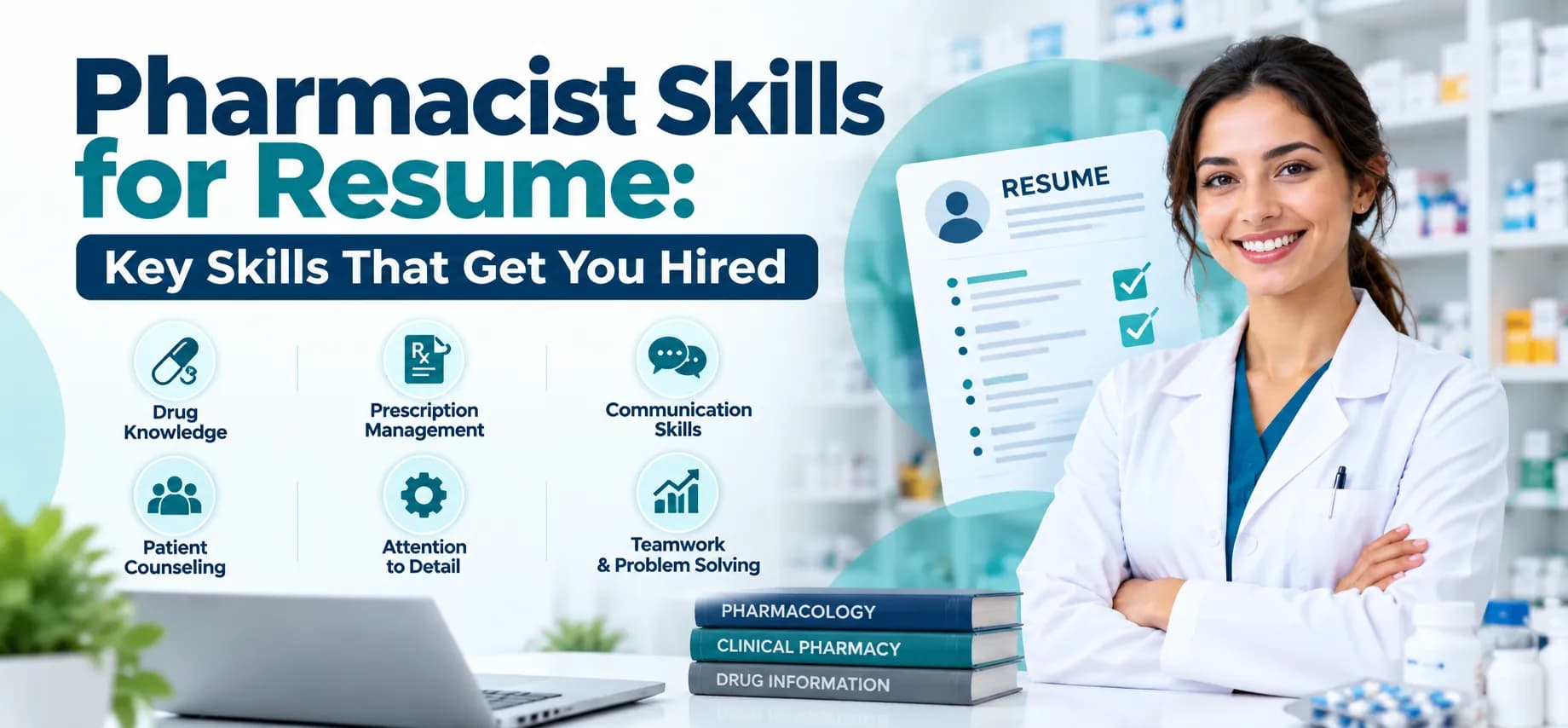
A strong pharmacist resume highlights medication safety, patient counseling, and regulatory expertise, helping candidates stand out to hospital and retail pharmacy recruiters.
A well-written pharmacist resume can be the difference between getting shortlisted for an interview and being overlooked. With hospitals, retail pharmacies, pharmaceutical companies, diagnostic centers, and healthcare organizations receiving hundreds of applications for a single position, employers look for resumes that clearly demonstrate the right skills, qualifications, and experience.
The most successful pharmacist resumes are not the longest—they are the most relevant. Recruiters spend only a few seconds scanning each resume, making it essential to highlight your technical expertise, patient care abilities, regulatory knowledge, and soft skills in a clear, organized format.
Why Pharmacist Skills Matter on a Resume
Healthcare employers need pharmacists who can do much more than dispense medications. Today's pharmacists are expected to:
- Ensure medication safety
- Provide patient counseling
- Prevent medication errors
- Collaborate with healthcare teams
- Maintain legal and regulatory compliance
- Use pharmacy management software efficiently
- Deliver excellent customer service
Listing these skills effectively on your resume helps recruiters quickly understand your capabilities and improves your readiness for relevant Pharmacist Jobs and other Healthcare Jobs.
Top Pharmacist Skills for Resume
1. Medication Dispensing
Medication dispensing is one of the most fundamental pharmacist responsibilities.
Include experience with:
- Prescription verification
- Accurate dispensing
- Label generation
- Dosage calculation
- Inventory tracking
- Controlled substance handling
2. Drug Knowledge
Recruiters expect pharmacists to demonstrate extensive pharmaceutical knowledge.
Examples include:
- Drug interactions
- Contraindications
- Generic substitutions
- Brand medications
- Dosage recommendations
- Adverse drug reactions
3. Patient Counseling
Patient education improves treatment outcomes and medication adherence.
Mention skills like:
- Medication counseling
- Lifestyle advice
- Dosage instructions
- Side effect explanation
- Patient communication
- Follow-up guidance
4. Prescription Verification
Accuracy is critical in pharmacy practice.
Highlight experience with:
- Prescription review
- Clinical validation
- Drug interaction screening
- Allergy checks
- Duplicate therapy identification
5. Inventory Management
Hospitals and retail pharmacies depend on pharmacists for inventory control.
Include:
- Stock management
- Expiry monitoring
- Vendor coordination
- Purchase planning
- Medicine storage
- Controlled inventory
6. Regulatory Compliance
Knowledge of healthcare regulations is highly valued.
Examples include:
- Pharmacy Act compliance
- NABH standards
- Drug regulations
- Schedule H medicines
- Narcotic regulations
- Documentation standards
7. Clinical Pharmacy Skills
Clinical pharmacists should showcase:
- Medication therapy management
- Clinical interventions
- ICU pharmacy
- Antibiotic stewardship
- Pharmacovigilance
- Therapeutic drug monitoring
8. Hospital Pharmacy Skills
If applying to hospitals, include:
- Inpatient pharmacy
- Ward pharmacy
- Emergency medication supply
- Sterile preparation
- IV admixture
- Medical record documentation
9. Pharmacy Software Skills
Digital healthcare continues to expand.
Mention experience with:
- Hospital Information Systems (HIS)
- Electronic Medical Records (EMR)
- Pharmacy Management Software
- ERP systems
- Billing software
- Inventory software
10. Communication Skills
Strong communication helps pharmacists work effectively with:
- Doctors
- Nurses
- Patients
- Caregivers
- Healthcare administrators
11. Attention to Detail
Medication errors can have serious consequences.
Employers value pharmacists who demonstrate:
- Accuracy
- Documentation
- Careful verification
- Precision
- Error prevention
12. Time Management
Busy pharmacies require pharmacists who can:
- Prioritize prescriptions
- Handle multiple patients
- Maintain workflow efficiency
- Meet deadlines
- Manage emergencies
Soft Skills Every Pharmacist Should Include
Along with technical expertise, employers also evaluate interpersonal abilities.
Important soft skills include:
- Problem-solving
- Leadership
- Teamwork
- Adaptability
- Critical thinking
- Customer service
- Decision-making
- Professional ethics
- Empathy
- Stress management
Technical Skills for Pharmacist Resume
Technical skills strengthen your resume and show you're ready for modern pharmacy practice.
Examples include:
- Medication dispensing
- Clinical pharmacy
- Drug information
- Inventory management
- Pharmacology
- Prescription review
- Medical terminology
- Patient counseling
- Healthcare documentation
- Pharmacy software
- Drug dosage calculations
- Clinical protocols
Pharmacist Skills for Resume for Freshers
Fresh graduates often worry about having limited work experience. However, recruiters also value internships, academic projects, and practical training.
Freshers should emphasize:
- Hospital internship
- Community pharmacy training
- Clinical postings
- Patient counseling
- Medication dispensing
- Drug information services
- Pharmaceutical calculations
- Communication skills
- Computer proficiency
- Willingness to learn
Pharmacist Skills for Resume Format
An effective resume follows a clean and recruiter-friendly structure.
Header
Include:
- Full Name
- Phone Number
- Email Address
- Location
- LinkedIn (optional)
Professional Summary
Write a short summary highlighting:
- Qualification
- Years of experience
- Pharmacy specialization
- Core strengths
Example:
“Licensed pharmacist with three years of hospital pharmacy experience specializing in medication dispensing, patient counseling, inventory management, and prescription verification. Passionate about improving patient safety through accurate pharmaceutical care.”
Skills Section
Organize into:
Technical Skills
- Medication Dispensing
- Clinical Pharmacy
- Drug Information
- Inventory Management
- Prescription Verification
Soft Skills
Continue Your Journey
Not sure where to go next?
Whether you're searching for your next healthcare opportunity or hiring qualified professionals, Nextenti helps you connect with the right people through AI-powered matching.
👩⚕️ Looking for Jobs?
Browse verified healthcare opportunities across hospitals, clinics and healthcare organizations.
Browse Jobs →🏥 Hiring Talent?
Post jobs and receive AI-matched healthcare professionals faster.
- Communication
- Teamwork
- Attention to Detail
- Leadership
- Time Management
Professional Experience
Include:
- Job title
- Organization
- Duration
- Responsibilities
- Achievements
Use action verbs such as:
- Managed
- Dispensed
- Coordinated
- Improved
- Verified
- Counseled
- Maintained
Education
Mention:
- B.Pharm
- M.Pharm
- Pharm.D
- University
- Graduation year
Certifications
Examples:
- Registered Pharmacist License
- Good Clinical Practice (GCP)
- Pharmacovigilance Training
- NABH Training
- Clinical Research Certification
Pharmacist Skills for Resume Sample
Professional Summary
“Licensed pharmacist with two years of retail pharmacy experience skilled in medication dispensing, prescription verification, patient counseling, inventory management, and pharmacy software. Dedicated to improving medication safety and patient satisfaction.”
Skills
Technical Skills
- Medication Dispensing
- Drug Interaction Review
- Prescription Validation
- Inventory Management
- Pharmacy Software
- Pharmacology
- Clinical Documentation
Soft Skills
- Communication
- Team Collaboration
- Customer Service
- Critical Thinking
- Time Management
- Accuracy
Pharmacist Skills for Resume Template
- Name
- Phone
- Location
Professional Summary
Write a 3–4 sentence summary.
Key Skills
- Medication Dispensing
- Prescription Review
- Drug Information
- Inventory Management
- Patient Counseling
- Pharmacy Software
- Communication
- Time Management
Experience
- Organization
- Role
- Duration
- Responsibilities
Education
- Degree
- University
- Year
Certifications
- Professional License
- Training Programs
How to Write a Pharmacist Resume
Creating an effective pharmacist resume involves more than listing qualifications. Follow these best practices:
Tailor Every Resume
Customize your resume for each job by including the skills and qualifications mentioned in the job description.
Use Relevant Keywords
Many employers use Applicant Tracking Systems (ATS). Include keywords such as:
- pharmacist skills for resume
- medication dispensing
- patient counseling
- inventory management
- pharmacy software
- prescription verification
- hospital pharmacy
Quantify Achievements
Instead of writing:
“Managed inventory.”
Write:
“Managed inventory of over 5,000 medicines while reducing stock shortages by 20%.”
Keep It Professional
Use:
- Consistent formatting
- Professional fonts
- Bullet points
- Clear headings
- Reverse chronological order
Proofread Carefully
Even a small spelling mistake can affect your credibility in a healthcare role.
Common Resume Mistakes to Avoid
Avoid these common errors:
- Generic objective statements
- Missing pharmacist license details
- Listing irrelevant skills
- Poor formatting
- Grammatical mistakes
- No measurable achievements
- Overly long resumes
- Not tailoring the resume for the role
Why Employers Value a Strong Pharmacist Resume
Healthcare organizations seek pharmacists who combine clinical expertise with strong communication and organizational skills. A resume that clearly showcases medication safety, patient care, regulatory compliance, and technology proficiency demonstrates your readiness to contribute effectively from day one.
A well-crafted resume also improves your chances of passing Applicant Tracking Systems (ATS), making it more likely that recruiters will review your application.
Build Your Healthcare Career with Nextenti
Finding the right opportunity is just as important as creating the right resume. At Nextenti, healthcare professionals can connect with verified employers across hospitals, pharmacies, diagnostic centers, healthcare startups, and pharmaceutical organizations.
Whether you're a fresher beginning your pharmacy career or an experienced pharmacist seeking your next role, Nextenti helps match your qualifications and skills with relevant healthcare job opportunities through an AI-powered hiring platform designed specifically for the healthcare industry.
Conclusion
A strong pharmacist resume highlights more than your educational qualifications—it demonstrates your ability to ensure medication safety, provide patient-centered care, collaborate with healthcare teams, and adapt to evolving pharmacy practices. By including the right combination of technical expertise, soft skills, measurable achievements, and ATS-friendly keywords, you can significantly improve your chances of securing interviews.
Whether you're preparing your first pharmacist resume or updating an existing one, focus on presenting your experience clearly, tailoring your resume to each role, and showcasing the skills employers value most. Combined with the right job opportunities through platforms like Nextenti, a well-crafted resume can be the first step toward a successful pharmacy career.
References
- Pharmacy Council of India (PCI). Education Regulations and Registration Guidelines.
- World Health Organization (WHO). The Role of the Pharmacist in the Healthcare System.
- International Pharmaceutical Federation (FIP). Competency Framework for Pharmacists.
- National Accreditation Board for Hospitals & Healthcare Providers (NABH). Standards for Hospital Pharmacy Services.
- American Society of Health-System Pharmacists (ASHP). Pharmacy Practice Standards.
- U.S. Bureau of Labor Statistics. Pharmacists – Occupational Outlook Handbook.
Frequently Asked Questions
1. How do I write a pharmacist resume?
Start with a professional summary, followed by your key skills, work experience, education, certifications, and pharmacist registration details. Tailor your resume for each job, use ATS-friendly keywords, and include measurable achievements wherever possible.
2. What should a pharmacist resume include?
A pharmacist resume should include:
- Contact information
- Professional summary
- Technical and soft skills
- Work experience
- Education
- Pharmacy registration or license
- Certifications
- Relevant software proficiency
- Professional achievements
3. What is the best format for a pharmacist resume?
The reverse chronological format is the best choice. It showcases your latest experience first and is preferred by most healthcare recruiters.
4. How do freshers write a pharmacist resume?
Freshers should highlight their education, internships, certifications, technical skills, and relevant coursework. Include a concise professional summary and use ATS-friendly keywords.
5. What skills should a pharmacist list on a resume?
Include skills such as medication dispensing, prescription verification, patient counseling, inventory management, pharmacy software, communication, teamwork, attention to detail, and time management.
Most Popular Searches on Nextenti
Featured Jobs
Explore latest openings by profession or location
Jobs by Profession
Browse roles by specialty
Jobs by Location
Explore openings by city
Featured Jobs
Explore latest openings by profession or location
Jobs by Profession
Browse roles by specialty
Jobs by Location
Explore openings by city
Keep Reading
You Might Also Like
 Healthcare Hiring
Why Choose Nextenti? How It Compares with Other Healthcare Hiring Platforms
Compare healthcare hiring platforms and see how Nextenti connects hospitals with professionals through AI matching and flexible hiring.

Meghana Ballekari
29 Oct 2026
 Interview Questions
Pharmacy Interview Questions & Answers 2026 (Freshers + Experienced)
Prepare for pharmacy interview questions with technical, HR and viva questions and answers for freshers and experienced pharmacists.
Sanjay Kagitha
29 Oct 2026
 Healthcare HR & Retention
How Workforce Analytics Helps Hospitals Hire Better
Discover how healthcare workforce analytics helps hospitals improve staffing, predict workforce needs, reduce hiring delays, and strengthen recruitment.
Nagaraju Bathini
29 Oct 2026