Pharmacy Interview Questions & Answers 2026 (Freshers + Experienced)

Sanjay Kagitha
29 Oct 2026 · 8 min read
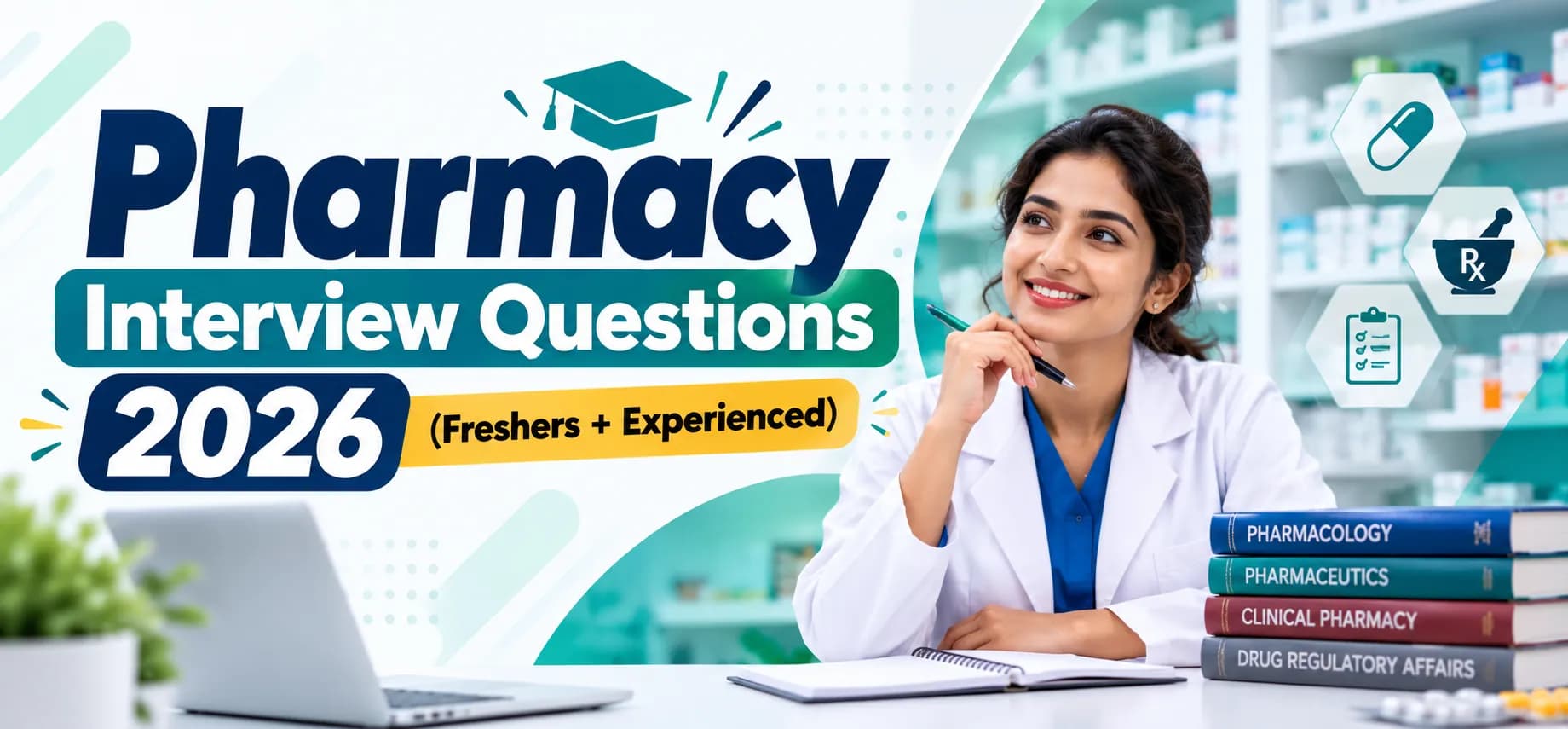
Pharmacy recruiters look for sound drug knowledge, accurate prescription handling and clear patient communication in freshers and experienced pharmacists alike.
The pharmacy industry is growing rapidly with increasing opportunities in hospitals, retail pharmacies, pharmaceutical companies, clinical research, and healthcare organizations. Whether you are a B.Pharm graduate, D.Pharm fresher, registered pharmacist, or experienced pharmacy professional, preparing for interviews is essential to secure the right opportunity.
Employers evaluate candidates based on their pharmacy knowledge, communication skills, patient handling abilities, drug knowledge, and practical experience. This guide covers the most common pharmacy interview questions and answers for freshers and experienced candidates to help you prepare confidently.
Why Pharmacy Interview Preparation Is Important
A pharmacy interview is not only about theoretical knowledge. Recruiters look for candidates who can:
- Understand medications and their uses
- Ensure patient safety
- Handle prescriptions accurately
- Communicate effectively with patients and doctors
- Follow pharmacy laws and regulations
- Manage inventory and documentation
Proper pharmacy interview preparation helps candidates answer technical, HR, and situation-based questions effectively and improves their chances of securing suitable Healthcare Jobs.
Common Pharmacy Interview Questions and Answers
1. Tell me about yourself.
Answer:
“I am a pharmacy graduate with knowledge of pharmacology, pharmaceutical sciences, and medication management. During my academic journey, I gained practical exposure through internships and training in prescription handling, drug information, and patient communication. I am passionate about healthcare and looking for an opportunity where I can apply my skills while continuously learning and growing as a pharmacy professional.”
2. Why did you choose pharmacy as a career?
Answer:
“I chose pharmacy because it combines healthcare, science, and patient service. Pharmacists play an important role in ensuring safe medication use, educating patients, and supporting doctors in better treatment outcomes.”
3. What are the responsibilities of a pharmacist?
Answer:
The major responsibilities of a pharmacist include:
- Dispensing medications accurately
- Reviewing prescriptions
- Providing medication counseling
- Monitoring drug interactions
- Maintaining pharmacy records
- Managing medicine inventory
- Ensuring compliance with healthcare regulations
Pharmacy Technical Interview Questions
4. What is the difference between a generic drug and a brand-name drug?
Answer:
A generic drug contains the same active ingredient, strength, dosage form, and effectiveness as a branded medicine but is usually available at a lower cost. A brand-name drug is developed and marketed under a specific company name.
5. What is pharmacovigilance?
Answer:
Pharmacovigilance is the science of monitoring, detecting, assessing, and preventing adverse effects or any other drug-related problems after medicines are introduced into the market.
6. What are the different routes of drug administration?
Answer:
Common routes of drug administration include:
- Oral route
- Intravenous (IV)
- Intramuscular (IM)
- Subcutaneous
- Topical
- Inhalation
- Rectal route
7. What is the difference between side effects and adverse drug reactions?
Answer:
Side effects are known and usually predictable effects of a medication, while adverse drug reactions are harmful and unintended responses that require medical attention.
8. What is the importance of prescription checking?
Answer:
Prescription checking helps prevent medication errors by verifying:
- Correct drug name
- Dose and frequency
- Patient information
- Possible drug interactions
- Contraindications
9. Explain the concept of drug interaction.
Answer:
Drug interaction occurs when one medicine affects the activity or effectiveness of another medicine. It can increase side effects, reduce effectiveness, or create harmful reactions.
10. What is the role of a pharmacist in patient counseling?
Answer:
A pharmacist educates patients about:
- Correct medication usage
- Dosage instructions
- Possible side effects
- Storage conditions
- Importance of completing treatment
Pharmacy Viva Questions for Freshers
11. What is the difference between syrup and suspension?
Answer:
A syrup is a clear liquid preparation containing dissolved ingredients, while a suspension contains insoluble drug particles dispersed in a liquid medium and requires shaking before use.
12. What is bioavailability?
Answer:
Bioavailability refers to the percentage of an administered drug that reaches the bloodstream and becomes available for therapeutic action.
13. What is the half-life of a drug?
Answer:
The half-life of a drug is the time required for the concentration of the drug in the body to reduce by half.
14. What are controlled drugs?
Answer:
Controlled drugs are medicines regulated by government authorities due to their potential for misuse, dependence, or abuse.
Pharmacy HR Interview Questions
15. Why should we hire you?
Answer:
Continue Your Journey
Not sure where to go next?
Whether you're searching for your next healthcare opportunity or hiring qualified professionals, Nextenti helps you connect with the right people through AI-powered matching.
👩⚕️ Looking for Jobs?
Browse verified healthcare opportunities across hospitals, clinics and healthcare organizations.
Browse Jobs →🏥 Hiring Talent?
Post jobs and receive AI-matched healthcare professionals faster.
“I have strong pharmacy knowledge, a willingness to learn, and a commitment to patient safety. I can contribute through accurate medication handling, good communication skills, and responsible pharmacy practices.”
16. What are your strengths?
Answer:
“My strengths include attention to detail, responsibility, teamwork, quick learning ability, and effective communication with patients and healthcare teams.”
17. What is your biggest weakness?
Answer:
“I continuously work on improving my skills and gaining more practical exposure. I believe learning and improvement are important parts of professional growth.”
18. Where do you see yourself in five years?
Answer:
“I see myself as an experienced pharmacy professional with strong clinical knowledge, contributing effectively to healthcare services and taking greater responsibilities.”
Pharmacy Interview Questions for Experienced Candidates
19. How do you handle medication errors?
Answer:
“I would immediately assess the situation, inform the concerned healthcare professional, follow reporting procedures, and take corrective actions to ensure patient safety.”
20. How do you manage difficult customers or patients?
Answer:
“I remain calm, listen carefully to their concerns, provide accurate information, and ensure they receive proper guidance while maintaining professionalism.”
21. How do you maintain pharmacy inventory?
Answer:
Inventory management includes:
- Regular stock checking
- Monitoring expiry dates
- Maintaining proper storage conditions
- Tracking fast-moving medicines
- Following FIFO and FEFO methods
Pharmacy Interview Tips for 2026
1. Revise Core Pharmacy Subjects
Focus on:
- Pharmacology
- Pharmaceutics
- Pharmaceutical Chemistry
- Clinical Pharmacy
- Pharmacovigilance
2. Understand the Job Role
Research whether the role is for:
- Hospital pharmacist
- Retail pharmacist
- Clinical pharmacist
- Pharma company position
- Medical representative
3. Prepare Real-Life Examples
Be ready to explain situations related to:
- Patient interaction
- Prescription handling
- Teamwork
- Problem-solving
4. Improve Communication Skills
Pharmacists interact with patients, doctors, and healthcare teams, so communication plays an important role.
5. Carry Important Documents
Keep ready:
- Resume
- Pharmacy registration certificate
- Educational certificates
- Internship experience documents
- Identification documents
Pharmacy Interview Preparation Checklist
- ✔ Research the organization
- ✔ Review pharmacy fundamentals
- ✔ Practice common pharmacy interview questions
- ✔ Prepare HR answers
- ✔ Dress professionally
- ✔ Maintain confidence and positive body language
Conclusion
Preparing for pharmacy interviews requires a combination of technical pharmacy knowledge, communication skills, and practical understanding of healthcare responsibilities. Whether you are a fresher or an experienced pharmacist, practicing these pharmacy interview questions and answers can help you confidently face interviews and improve your chances of getting hired.
Platforms like Nextenti help healthcare professionals discover career opportunities by connecting skilled pharmacy candidates with hospitals, healthcare organizations, and employers looking for qualified talent.
References
- Pharmacy Council of India (PCI) – Pharmacy education and regulations
- World Health Organization (WHO) – Medication safety guidelines
- National Association of Boards of Pharmacy (NABP) – Pharmacy practice resources
- Pharmaceutical industry career resources and healthcare recruitment trends
Frequently Asked Questions
1. What are common pharmacy interview questions?
Common pharmacy interview questions include:
- Tell me about yourself
- Why did you choose pharmacy?
- What are the responsibilities of a pharmacist?
- Explain drug interactions
- What is pharmacovigilance?
- How do you handle prescription errors?
2. How do I prepare for a pharmacy interview?
Prepare by revising pharmacy fundamentals, understanding the job role, practicing technical and HR questions, improving communication skills, and researching the organization before the interview.
3. What technical questions are asked in a pharmacy interview?
Technical pharmacy interview questions usually cover pharmacology, drug classifications, dosage forms, prescription handling, adverse drug reactions, drug interactions, inventory management, and patient counseling.
4. What should I wear to a pharmacy interview?
Wear professional formal attire such as a formal shirt, trousers, and clean professional footwear. Maintain a neat appearance to create a positive first impression.
5. How do I introduce myself in a pharmacy interview?
Start with your education, pharmacy background, practical experience, skills, and career goals. Keep your introduction clear, confident, and focused on your pharmacy expertise.
Most Popular Searches on Nextenti
Featured Jobs
Explore latest openings by profession or location
Jobs by Profession
Browse roles by specialty
Jobs by Location
Explore openings by city
Featured Jobs
Explore latest openings by profession or location
Jobs by Profession
Browse roles by specialty
Jobs by Location
Explore openings by city
Keep Reading
You Might Also Like
 Healthcare Hiring
Why Choose Nextenti? How It Compares with Other Healthcare Hiring Platforms
Compare healthcare hiring platforms and see how Nextenti connects hospitals with professionals through AI matching and flexible hiring.

Meghana Ballekari
29 Oct 2026
 Resume Tips
Pharmacist Skills for Resume: Key Skills That Get You Hired
Discover essential pharmacist resume skills, technical expertise, and soft skills to stand out to recruiters and find relevant pharmacist jobs.
Srikanth
29 Oct 2026
 Healthcare HR & Retention
How Workforce Analytics Helps Hospitals Hire Better
Discover how healthcare workforce analytics helps hospitals improve staffing, predict workforce needs, reduce hiring delays, and strengthen recruitment.
Nagaraju Bathini
29 Oct 2026